

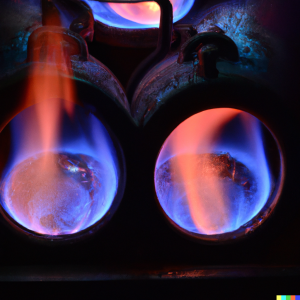
Natural gas boilers can typically be modified to run on hydrogen mixed with natural gas, but the extent to which a particular boiler can operate on hydrogen depends on its design and age.
In general, natural gas boilers can typically operate on mixtures of up to 20% hydrogen without significant modifications. However, higher levels of hydrogen may require modifications to the burner and fuel injection system, as well as changes to the combustion control system to ensure that the flame is stable and efficient.
It’s worth noting that hydrogen has different combustion properties than natural gas, so modifications may be needed to ensure safe and efficient operation. Additionally, the hydrogen supply infrastructure needs to be in place to deliver hydrogen to boilers, and safety measures such as gas detection systems and ventilation may need to be upgraded.
Overall, transitioning to hydrogen mixed with natural gas can help reduce carbon emissions and improve the sustainability of heating systems, but it requires careful planning and evaluation to ensure safety, reliability, and economic feasibility.
Mixing hydrogen into natural gas supplies can have several benefits, including:
- Reducing carbon emissions: Hydrogen is a clean-burning fuel that does not produce carbon dioxide when it is burned. By adding hydrogen to natural gas, the resulting fuel mixture can have lower carbon emissions than pure natural gas.
- Utilizing excess renewable energy: Hydrogen can be produced from excess renewable energy sources such as wind and solar power. By mixing hydrogen into natural gas supplies, excess renewable energy can be stored and used to supplement natural gas supplies.
- Improving gas quality: Hydrogen can improve the quality of natural gas by increasing its calorific value, which is the amount of energy that can be extracted from a unit of gas. This can help to increase the efficiency of natural gas use.
- Diversifying energy sources: By adding hydrogen to natural gas supplies, the resulting fuel mixture can provide a more diversified energy source that is less dependent on traditional fossil fuels.
However, it is important to note that adding hydrogen to natural gas supplies requires careful consideration and planning. The infrastructure for hydrogen transportation and storage is not as well-established as it is for natural gas, and there may be safety concerns that need to be addressed. Additionally, the cost of producing and transporting hydrogen is currently higher than that of natural gas, so the economic feasibility of such a transition needs to be carefully evaluated.

Leave a Reply