

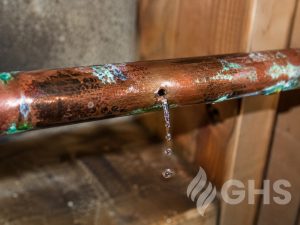
Copper pipe has been used in UK plumbing and heating systems for decades because it is reliable, durable and easy to work with. However, many homeowners and engineers eventually come across copper pipe that has gone thin, developed pinholes or started leaking unexpectedly.
While these leaks may appear random, there is usually an underlying cause. Understanding why copper pipe fails can help prevent expensive damage and repeated repairs.
What Causes Copper Pipe to Go Thin?
Copper pipe becomes thin when the metal slowly corrodes or erodes over time. This can happen internally, externally or through a combination of both.
Internal Corrosion
Internal corrosion occurs when water flowing through the pipe begins to attack the copper itself.
Common causes include:
- Aggressive or acidic water
- High water velocity
- Excess soldering flux left inside the pipework
- Poorly flushed systems
- Oxygen entering heating systems
- Chemical contamination
Over time, the copper weakens until tiny holes begin to appear.
What Are Pinhole Leaks?
Pinhole leaks are very small perforations in copper pipe caused by localised corrosion or erosion. They often begin as tiny dark spots before eventually allowing water to escape.
Common warning signs include:
- Green staining on pipework
- Small beads of water
- Black spotting
- Pressure loss in heating systems
- Crusty mineral deposits
These leaks are often found:
- Near soldered joints
- On bends and elbows
- Around pumps
- Under floors
- On horizontal pipe runs
Is It Worse in Hard Water Areas?
Not necessarily. Hard water and soft water affect copper pipes differently.
Soft Water
Soft or acidic water is generally more aggressive towards copper and is more likely to cause:
- Internal corrosion
- Pipe thinning
- Pitting
- Pinhole leaks
This is because softer water can slowly dissolve copper internally.
Hard Water
Hard water usually causes limescale to build up in pipes. In some cases, this scale can actually provide a slight protective barrier to the copper.
However, hard water creates different problems, including:
- Limescale buildup
- Reduced flow rates
- Blocked heat exchangers
- Hot spots within systems
- Poor boiler efficiency
In areas such as London, scale-related failures are often more common than aggressive copper corrosion.
Why Do Secondary Hot Water Returns Fail First?
Secondary hot-water return pipework is one of the most common locations for copper pinhole failures.
This is because secondary circulation systems operate under harsh conditions almost constantly.
Continuous Hot Water Circulation
Secondary returns often run:
- 24 hours a day
- At high temperatures
- With constant water movement
This combination dramatically increases corrosion and erosion.
High Water Velocity
Oversized circulation pumps or undersized pipework can cause excessive flow speeds. Fast-moving hot water gradually wears away the inside of the copper pipe.
This is known as:
- Erosion corrosion
The damage is usually worse:
- On bends
- Near tees
- Around pump discharge points
Oxygenated Water
Unlike sealed heating systems, domestic hot water systems constantly introduce fresh oxygenated water. Oxygen accelerates corrosion inside the copper pipe.
Flux Residue
Secondary return systems often contain many soldered joints. If excessive flux was used during installation and not properly flushed out, it can slowly attack the pipe internally for years.
Common Causes of Copper Pipe Failure in Heating Systems
In domestic heating systems, copper pipe failures are frequently linked to poor water quality or installation issues, including:
- Lack of inhibitor
- Sludge and magnetite buildup
- Oxygen ingress
- Poor flushing
- Oversized pumps
- Incorrect pipe sizing
- Poor installation practices
Microbore pipework can be especially vulnerable because its walls are already very thin.
Can Pinhole Leaks Be Repaired?
A single pinhole can often be temporarily repaired, but repeated failures usually indicate a broader issue within the system.
If multiple leaks appear over time, it may be necessary to:
- Chemically clean the system
- Carry out a power flush
- Test water quality
- Add corrosion inhibitor
- Replace sections of pipework
Simply repairing one leak without addressing the root cause may only delay further failures.
How to Prevent Copper Pipe Corrosion
Good system design and maintenance are the key to preventing premature copper pipe failure.
Important preventative measures include:
- Proper flushing after installation
- Correct inhibitor levels
- Sensible pump speeds
- Correct pipe sizing
- Avoiding excessive soldering flux
- Regular servicing and water quality checks
Need Help With Heating System Problems?
If your heating or hot water system is experiencing repeated leaks, pressure loss, sludge, or circulation issues, a professional investigation can often identify the root cause before major damage occurs.
The GHS Group can help diagnose heating system faults, circulation problems, water quality issues and ongoing corrosion concerns before they become expensive repairs.

Leave a Reply