

Becoming an air conditioning engineer or heat pump engineer is an exciting route into the future of heating, cooling and low-carbon technology.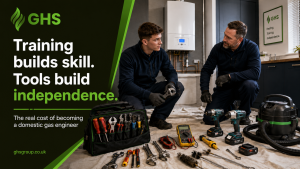
But it is not just about passing training, gaining experience, understanding refrigeration principles, learning F-Gas rules, or installing modern heat pump systems.
One of the highest hidden costs is the cost of tools.
When you are training, you will often work alongside a lead engineer. You may borrow their vacuum pump, gauges, flaring tools, torque wrenches, recovery machine, nitrogen kit, electrical testers, hand tools and power tools.
That is normal at the beginning.
However, once you become more useful on-site, there is an expectation that you start building your own kit. Even if you work for a company, you may still need your own day-to-day tools.
Some employers may provide the expensive equipment, such as:
- Refrigerant recovery machine
- Vacuum pump
- Digital manifold set
- Nitrogen regulator
- Refrigerant scales
- Specialist commissioning equipment
- Power tools
- Company van stock
- Certification software
But many engineers are still expected to own a reliable personal tool kit.
Tools are not a luxury. They are part of being able to do the job safely, neatly, legally and professionally.
Why Tools Matter So Much in Air Conditioning and Heat Pumps
Air conditioning and heat pump work requires accuracy.
An engineer may need to:
- Install pipework
- Flare copper correctly
- Pressure test systems
- Evacuate systems properly
- Measure vacuum accurately
- Charge refrigerant by weight
- Check superheat and subcooling
- Test electrical supplies
- Diagnose faults
- Check sensors and thermistors
- Commission systems
- Work safely at height
- Protect customers’ homes
- Keep records for compliance
Every one of those jobs needs the right tools.
Poor tools can cause poor flares, leaks, moisture in systems, incorrect refrigerant charge, failed commissioning and expensive callbacks.
This is why air conditioning and heat pump tools are not just about speed. They affect safety, reliability, warranty and reputation.
Training: Why Borrowing Tools Is Normal at First
When you are training, you are there to learn.
You may borrow:
- Manifold gauges
- Vacuum pump
- Micron gauge
- Flaring tool
- Tube cutter
- Deburring tool
- Torque wrench
- Nitrogen regulator
- Refrigerant scales
- Leak detector
- Multimeter
- Clamp meter
- Drill
- SDS drill
- Cable rods
- Access equipment
That is normal in the early stages.
However, borrowing tools should not become your long-term plan. A lead engineer’s tools are part of their livelihood. If you constantly need to borrow them, it can slow the job down and make you look unprepared.
A good trainee should start building their own kit slowly.
Even buying one or two good tools each month can make a big difference.
The First Air Conditioning / Heat Pump Tool Kit
A trainee or newly qualified engineer should start with a strong personal hand-tool kit before rushing into expensive commissioning equipment.
Essential hand tools
You will likely need:
- Adjustable spanners
- Wide-jaw adjustable spanner
- Flare nut spanners
- Open-ended spanner set
- Screwdriver set
- Insulated screwdrivers
- Terminal screwdrivers
- Long nose pliers
- Side cutters
- Combination pliers
- Allen keys
- Torx bits
- Small socket set
- Tape measure
- Spirit level
- Utility knife
- Junior hacksaw
- Deburring tool
- Pipe cutters
- Tube reamer
- Picks and hooks
- Mirror inspection tool
- Head torch
- Tool bag or backpack
Good hand tools matter. A poor tube cutter or weak flare tool can create problems that cost far more than the tool you tried to save money on.
Refrigeration and Commissioning Tools
This is where the cost starts to climb.
For air conditioning and heat pump work, you may need:
- Manifold gauge set
- Digital manifold set
- Refrigerant hoses
- Low-loss fittings
- Core removal tools
- Vacuum pump
- Micron gauge
- Refrigerant scales
- Recovery machine
- Recovery cylinder
- Nitrogen regulator
- OFN pressure testing kit
- Electronic leak detector
- Bubble leak detection fluid
- Flaring tool
- Torque wrench set
- Pipe benders
- Thermometers
- Clamp temperature probes
- Digital psychrometer
- Schrader valve tools
- Vacuum-rated hoses
A manifold set allows engineers to measure system pressures, diagnose faults, charge and recover refrigerant, carry out vacuum procedures and monitor system performance.
The Big Cost Items
Digital manifold set
A digital manifold can be a major investment.
Typical costs can range from several hundred pounds to over £1,000, depending on the brand and kit. Current UK listings show digital heat pump manifold kits around £389–£450 RRP, while higher-end digital manifold heat pump kits can be over £1,100 inc VAT.
Vacuum pump and micron gauge
A proper evacuation is vital. A vacuum pump removes gas, vapour and contaminants from refrigeration systems after recovery and repair, and a deep vacuum helps ensure the system is free from contaminants before charging.
A decent vacuum pump and micron gauge setup can cost anything from £300–£900+, depending on the brand, size and whether it is part of a commissioning kit. Some A2L commissioning kits, including a vacuum pump, hoses and a micron gauge, are listed around £800–£900.
Recovery machine
A recovery machine is one of the most expensive items.
It is used to safely remove refrigerant from systems before repair, replacement or decommissioning. Recovery machines are stocked specifically for safe, compliant system maintenance, and modern machines may be suitable for common refrigerants including R32 and A2L gases.
Typical costs can range from £600–£1,200+. UK listings show some recovery units around £662.94, with others over £1,100 depending on model and specification.
Electrical Testing Tools
Air conditioning and heat pump engineers also need strong electrical fault-finding skills.
You may need:
- Two-pole voltage tester
- Proving unit
- Lock-off kit
- Multimeter
- Clamp meter
- Insulated screwdrivers
- Terminal drivers
- Continuity tester
- Cable strippers
- Crimping tool
- Wago connectors
- Fuses
- Test leads
Heat pumps are not just pipework. You may be dealing with sensors, pumps, controls, printed circuit boards, communication cables, outdoor units, indoor units and supplies.
Safe isolation is essential.
Power Tools for Air Conditioning and Heat Pump Engineers
Installation work requires more power tools.
Common tools include:
- Combi drill
- Impact driver
- SDS drill
- Core drill
- Hole saw set
- Step drill bits
- Multi-tool
- Reciprocating saw
- Angle grinder
- Work lights
- Vacuum or dust extractor
- Cable rods
- Battery chargers
- Spare batteries
For heat pump work, you may also need tools for:
- Outdoor unit bases
- Wall brackets
- Pipe routes
- Trunking
- Lagging
- Condensate routes
- Cylinders
- Buffer vessels
- Heating pipework
- Electrical containment
As with other trades, choosing one main battery platform early is important. Mixing brands can leave you with too many chargers and not enough charged batteries.
Plumbing and Heating Tools for Heat Pump Engineers
Heat pump engineers often need more heating and plumbing tools than air conditioning engineers.
You may need:
- 15mm, 22mm and 28mm pipe cutters
- Pipe benders
- Deburring tools
- Press-fit tool, depending on the company system
- Pump pliers
- Drain-off keys
- Hose and buckets
- Radiator bleed key
- System flushing tools
- Filling loop and pressure gauge
- Expansion vessel pump
- Water quality test kit
- Inhibitor test kit
- Thermometers and clamp probes
- Flow meter or commissioning equipment
- Insulation knife
- Pipe lagging tools
This is especially important for air source heat pumps, where correct flow rate, pipe sizing, system cleanliness and commissioning are crucial.
Cost of an Air Conditioning Engineer Tool Kit
For an air conditioning engineer, excluding the largest company-provided equipment, a realistic personal tool cost may look like this:
| Level | Estimated cost |
|---|---|
| Basic trainee personal kit | £500–£900 |
| Good working hand-tool kit | £1,000–£1,800 |
| Service/fault-finding kit with basic refrigeration tools | £2,000–£4,000 |
| Fully equipped AC engineer kit with commissioning and recovery equipment | £4,500–£8,000+ |
If the company provides the recovery machine, vacuum pump, gauges and nitrogen kit, your personal cost may be much lower.
If you are self-employed or subcontracting, your costs increase quickly.
Cost of a Heat Pump Engineer Tool Kit
Heat pump work can cross over between refrigeration, plumbing, heating and electrical work.
A heat pump engineer may need more equipment than someone who only fits small split air conditioning systems.
| Setup | Estimated cost |
|---|---|
| Basic trainee heat pump kit | £600–£1,000 |
| Good personal hand-tool and testing kit | £1,200–£2,500 |
| Installation kit with power tools and heating tools | £3,000–£6,000 |
| Fully equipped heat pump engineer kit | £6,000–£12,000+ |
The higher figure may include refrigeration tools, heating tools, power tools, test instruments, dust extraction, access equipment, press-fit tools and commissioning equipment.
Consumables You May Need to Carry
A good engineer also needs consumables.
These may include:
- Pipe insulation
- Trunking
- Screws and plugs
- Wall brackets
- Cable ties
- Wago connectors
- Fuses
- Condensate fittings
- Drain hose
- Pipe clips
- Nitrogen
- Brazing rods, where applicable
- Flare nuts
- Schrader cores
- Service caps
- Gaskets
- Insulation tape
- Electrical tape
- Cable glands
- Crimps
- Labels
- Leak detection fluid
- Vacuum pump oil
- Drill bits
- Hole saws
- Blades
Consumables add up quickly. A tidy van stock can save huge amounts of wasted time.
Why You Need to Budget for Tools From Your Wages
Once you qualify, your wages may improve. But so do your costs.
Tools wear out. Batteries fail. Hoses get damaged. Vacuum pump oil needs changing. Test leads break. Gauges need care. Leak detectors may need sensors. Cutters go blunt. Recovery cylinders need managing. Drill bits and hole saws do not last forever.
A sensible engineer should set aside money every month.
| Monthly tool budget | Yearly amount |
|---|---|
| £50 per month | £600 per year |
| £100 per month | £1,200 per year |
| £150 per month | £1,800 per year |
| £200 per month | £2,400 per year |
| £300 per month | £3,600 per year |
For air conditioning and heat pump engineers, a slightly higher tool budget may be needed because the specialist equipment is expensive.
Tools are not just a cost. They are part of your earning ability.
How Tools Can Affect Your Career
Your tools can affect how quickly you progress.
An engineer with a tidy, reliable kit is easier to trust with more responsibility.
Having the right tools can help you:
- Work more independently
- Complete jobs faster
- Commission systems properly
- Reduce leaks and callbacks
- Improve fault-finding
- Look more professional
- Avoid borrowing constantly
- Build confidence
- Move towards lead engineer roles
- Become more useful to an employer
- Increase earning potential
- Move into renewables
This is especially important in heat pumps. The industry needs skilled engineers who can install, commission and diagnose systems properly.
A good tool kit helps you become that engineer.
Buy Smart, Not Flashy
New engineers can feel pressure to buy expensive kit too early.
That is not always best.
Start with the tools that help you work safely, neatly and reliably.
Best buying order for a trainee AC or heat pump engineer
- Tool bag or backpack
- Screwdrivers, spanners and pliers
- Pipe cutters and deburring tools
- Flare nut spanners
- Two-pole voltage tester
- Proving unit
- Multimeter
- Lock-off kit
- Flaring tool
- Torque wrench set
Next stage
Once you are progressing, consider:
- Manifold gauge set
- Vacuum pump
- Micron gauge
- Refrigerant scales
- Nitrogen regulator and pressure test kit
- Leak detector
- Clamp meter
- Better power tools
- Dust extraction
- Recovery machine, if not company-provided
Do not buy specialist equipment just because someone else has it. Buy what your role needs and what you are competent and authorised to use.
Things to Think About Before Buying Specialist Tools
Refrigerant compatibility
Make sure your gauges, hoses, recovery machine and equipment are suitable for the refrigerants you are working with.
Modern systems may use refrigerants such as R32 or other A2L gases, so compatibility matters.
Accuracy
Charging and testing accuracy are important.
A poor set of scales, damaged hoses or inaccurate gauges can lead to poor system performance.
Vacuum quality
A system that has not been evacuated properly can suffer from moisture and contaminants.
This can lead to reliability problems, compressor damage and callbacks.
Flaring quality
Bad flares cause leaks.
A decent flaring tool, proper deburring, proper torque, and good workmanship are worth the investment.
Electrical safety
Do not skip safe isolation equipment.
Air conditioning and heat pump systems involve electrical supplies, controls, communication wiring and moving parts.
Battery platform
Choose one main power tool battery system early.
Popular trade platforms include:
- Milwaukee
- Makita
- DeWalt
- Bosch Professional
Stick with one where possible.
Dust and customer care
Installation work can be messy.
Think about:
- Dust sheets
- Floor protection
- Vacuum
- Drill dust extraction
- Neat trunking
- Clean pipe routes
- Professional finishing
Customers remember how you leave their home.
Tool security
Specialist AC and heat pump tools are expensive and attractive to thieves.
Think about:
- Van locks
- Tool insurance
- Serial numbers
- Tool marking
- Lockable storage
- Taking expensive tools indoors overnight
- Tracking systems were suitable
A stolen tool kit can stop you from working.
Tools Are Part of Professional Standards
A good air conditioning or heat pump engineer needs training, experience, patience and attention to detail.
But tools are also part of the standard.
If you cannot flare correctly, pressure-test properly, evacuate deeply, charge accurately, test safely, and leave the job tidy, the quality of your work will suffer.
The right tools help you work:
- Safely
- Legally
- Cleanly
- Efficiently
- Confidently
- Professionally
They also show respect for the customer, your employer, the engineer training you and your own future career.
Final Advice for New AC and Heat Pump Engineers
When you are training, borrowing tools is normal.
When you are qualified, building your own kit becomes essential.
You do not need everything immediately, but you do need a plan.
Start with safety, then hand tools, then pipework tools, then electrical testing tools, then specialist refrigeration and heat pump equipment.
A realistic tool investment could be:
- £500–£900 for a very basic trainee kit
- £1,000–£1,800 for a good personal hand-tool kit
- £2,000–£4,000 for service and fault-finding with basic refrigeration tools
- £3,000–£6,000 for a stronger heat pump installation setup
- £6,000–£12,000+ for a fully equipped AC or heat pump engineer setup
It is not cheap, but it is part of becoming a professional.
In air conditioning and heat pumps, your tools are not just items in a bag. They are part of your accuracy, safety, confidence, earning ability and future career.

Leave a Reply