

Becoming a qualified UK domestic gas engineer is not just about passing your training, building a portfolio, completing ACS assessments and getting onto the Gas Safe Register.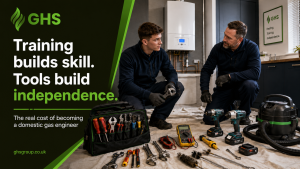
That is only part of the journey.
One of the biggest shocks for new engineers is the cost of tools.
When you are training, you often work alongside a lead engineer and borrow their tools. That is normal. You use their analyser, drills, hand tools, testing kit and specialist equipment while you are learning. But once you qualify and start building your own career, there is an expectation that you will have your own basic kit.
Even if you work for a company, you will usually still need to invest in your own day-to-day tools.
Some companies provide larger or specialist equipment, such as:
- Flue gas analyser
- SDS drill
- Core drill
- Power tools for heavier installation work
- Press-fit tools
- Company van stock
- Certification software
But most engineers are still expected to own a reliable personal tool kit.
That is why anyone considering becoming a domestic gas engineer needs to understand the real cost early on. Tools are not a luxury. They are part of being able to do the job properly, safely and professionally.
Why Tools Matter So Much in the Gas Industry
Gas engineering is not just “turning up with a spanner”.
A domestic gas engineer may need to:
- Service boilers
- Diagnose faults
- Repair leaks
- Replace pumps, valves and fans
- Test boiler electrics
- Drain heating systems
- Remove boiler parts
- Check gas pressures
- Clean condensate traps
- Fit controls
- Install boilers
- Run pipework
- Drill walls
- Core flue holes
- Protect customers’ homes
Every one of those jobs needs the right tools.
Poor tools slow you down. Missing tools make you rely on others. Unsafe tools can put you, the customer and the company at risk.
A good engineer does not need to own every shiny tool on the market, but they do need reliable tools that allow them to work safely, neatly and efficiently.
Training: Why Borrowing Tools Is Normal at First
During training, you will often shadow a qualified engineer.
At this stage, you are there to learn. You may borrow:
- Screwdrivers
- Spanners
- Multimeter
- Drill
- Vacuum
- Boiler brushes
- Pipe cutters
- Gas analyser
- Manometer
- Specialist boiler tools
This is normal because you are not yet expected to work independently.
However, it is important not to get too comfortable relying on someone else’s kit. A lead engineer’s tools are part of their livelihood. Borrowing tools too often can slow them down and make you look unprepared.
A good trainee should gradually build their own kit as they learn.
Even buying a few tools each month can make a big difference.
The First Tool Kit: Service and Breakdown Engineer
If you are going into service and breakdown work, your kit will be different from an installer’s kit.
A service and breakdown engineer needs tools for diagnosis, repair, servicing and safe checking.
Essential hand tools
You will need:
- Adjustable spanners
- Wide-jaw adjustable spanner
- Water pump pliers
- Long nose pliers
- Side cutters
- Combination pliers
- Screwdriver set
- Insulated screwdrivers
- Stubby screwdrivers
- Torx bit set
- Allen key set
- Nut drivers
- Small socket set
- Picks and hooks
- Junior hacksaw
- Stanley knife
- Tape measure
- Small spirit level
- Mirror on a stick
- Head torch
- Magnetic tray
These are the tools you reach for every day. If they are poor quality, worn out or missing, simple jobs quickly become frustrating.
Electrical Testing Tools
Modern boilers are full of electrical components, sensors, controls and wiring centres.
A gas engineer does not need to be an electrician to work on boiler fault finding, but they do need to understand safe isolation and basic electrical testing.
Useful electrical tools include:
- Two-pole voltage tester
- Proving unit
- Multimeter
- Insulated screwdrivers
- Lock-off kit
- Small terminal screwdrivers
- Cable strippers
- Wago connectors
- Spare fuses
A neon screwdriver is not enough. Proper safe isolation equipment is essential.
Boiler Service and Breakdown Tools
A service engineer also needs cleaning and diagnostic tools.
These may include:
- Boiler brush set
- Condensate trap brush
- Small wet vacuum
- Service vacuum
- Hand pump for condensate blockages
- Feeler gauges
- Seal picks
- Silicone grease where manufacturer-approved
- Small wire brush
- Emery cloth
- Abrasive pads
- Clamp thermometer
- Infrared thermometer
- Expansion vessel pressure gauge
- Foot pump or battery inflator
- Schrader valve tool
These tools help with common boiler faults, blocked condensates, leaking seals, poor circulation and servicing tasks.
Plumbing Tools for Service Engineers
Even if you are mainly doing gas service and breakdown, you will still deal with water-side issues.
You may need:
- 15mm pipe slice
- 22mm pipe slice
- Small pipe cutter
- Deburring tool
- Radiator bleed key
- Drain-off key
- Hose and hose clips
- Bucket
- Rubble tub
- Towels
- Absorbent pads
- Pump spanners
- Compression fitting spanners
- Basic washers and O-rings
A boiler breakdown often turns into a plumbing job very quickly.
Cost of a Service and Breakdown Tool Kit
For a personal service and breakdown kit, excluding a flue gas analyser, SDS drill and larger company-owned tools, a realistic cost would be:
| Level | Estimated cost |
|---|---|
| Basic starter personal kit | £500–£800 |
| Good working kit | £1,000–£1,500 |
| Very well-equipped breakdown kit | £1,800–£2,500 |
For someone newly qualified, a sensible target is around £1,000–£1,200 of personal tools.
You do not have to buy everything at once, but you should plan for it.
Installer Tools: A Bigger Investment
If you become a domestic gas/heating installer, the cost of tools increases quickly.
An installer needs more power tools because the work involves:
- Hanging boilers
- Core drilling flue holes
- Drilling brick and concrete
- Cutting pipework
- Cutting floors
- Removing old systems
- Running new pipework
- Fitting filters
- Installing cylinders
- Making good
- Protecting customers’ homes
Installation work is physically harder on tools and usually requires more equipment.
Power Tools an Installer May Need
A domestic boiler installer may need:
- Combi drill
- Impact driver
- SDS drill
- Core drill
- Diamond core bits
- Multi-tool
- Reciprocating saw
- Angle grinder
- Circular saw or plunge saw
- Cordless pipe cutter
- Dust extractor
- Wet/dry vacuum
- Work lights
- Battery chargers
- Extra batteries
As you progress, you may also consider:
- Press-fit tool
- Boiler lifting aid
- M-class dust extractor
- Thermal camera
- Pipe freezing kit
- Larger pipe cutters
- Specialist flue tools
An installer’s kit can easily become several thousand pounds.
Cost of an Installer Tool Kit
A realistic installer tool investment looks like this:
| Installer setup | Estimated cost |
|---|---|
| Basic installer power tool kit | £1,500–£2,500 |
| Good professional installer kit | £3,000–£5,500 |
| Fully equipped installer kit | £6,000–£10,000+ |
This does not include:
- Van
- Insurance
- Training
- ACS
- Gas Safe registration
- Flue gas analyser
- Van stock
- Calibration
- Specialist manufacturer tools
For a new installer, a realistic goal is to build towards a £3,000–£5,000 kit over time.
Why You Need to Budget for Tools From Your Wages
This is where many new engineers get caught out.
Once you qualify, your wages may improve, but so do your responsibilities. You may need to buy, replace, repair, and upgrade tools.
Tools should be treated as a career investment, not a way to spend money.
A sensible approach is to set aside a fixed amount each month for tools.
For example:
| Monthly tool budget | Yearly amount |
|---|---|
| £50 per month | £600 per year |
| £100 per month | £1,200 per year |
| £150 per month | £1,800 per year |
| £200 per month | £2,400 per year |
Even £50–£100 per month can help a new engineer build a strong kit without financial panic.
Tools wear out. Batteries fail. Blades go blunt. Test equipment needs calibration. Small consumables disappear. If you do not budget for tools, every purchase feels like a setback.
How Your Tools Can Affect Your Career
Your tools can affect how quickly you progress after qualifying.
A new engineer with a tidy, reliable tool kit is easier to trust with more responsibility.
Having the right tools can help you:
- Work more independently
- Complete jobs faster
- Look more professional
- Reduce mistakes
- Avoid borrowing constantly
- Build confidence
- Take on better jobs
- Move towards lead engineer roles
- Increase earning potential
- Become more useful to an employer
On the other hand, always turning up without the right kit can hold you back.
It can make you look unprepared, even if your knowledge is good.
Buy Smart, Not Flashy
New engineers often feel pressure to buy expensive tools straight away.
That is not always the best move.
The better approach is to buy tools in the order that helps you earn and learn.
For service and breakdown engineers, start with:
- Tool bag
- Screwdrivers, Torx bits and Allen keys
- Spanners and grips
- Pliers and cutters
- Picks and seal tools
- Two-pole tester and proving unit
- Multimeter
- Pipe slices and draining kit
- Boiler brushes and cleaning kit
- Basic washers, O-rings and fuses
For installers, then add:
- Combi drill and impact driver
- SDS drill
- Core drilling kit
- Multi-tool
- Grinder
- Reciprocating saw
- Dust extraction
- Extra batteries
- Access equipment
- Press-fit tool when the workload justifies it
Do not buy a press-fit tool just because someone else has one. Buy it when it genuinely saves time and earns money.
Things to Think About Before Buying Power Tools
Battery platform
Choose one main battery platform early.
Popular trade brands include:
- Milwaukee
- Makita
- DeWalt
- Bosch Professional
The mistake is buying different brands for every tool. You end up with too many chargers, different batteries and no system.
Brushless tools
Brushless tools usually cost more, but they often give:
- Better battery life
- More power
- Less overheating
- Longer tool life
For daily trade use, brushless is usually worth considering.
Batteries
Batteries are expensive, but they matter.
For installation work, you should think about:
- At least two decent batteries
- Ideally, three or four batteries
- A fast charger
- Smaller batteries for lighter tools
- Bigger batteries for SDS drills and grinders
A cordless grinder or SDS drill can drain batteries quickly.
Dust control
Good installers control dust.
Customers notice:
- Dust on carpets
- Brick dust in kitchens
- Dirty airing cupboards
- Messy bedrooms
- Poor protection
Dust sheets, vacuums, stair runners and extraction may not look exciting, but they help protect your reputation.
Tool security
Tools are expensive and easy to steal.
Think about:
- Van locks
- Tool insurance
- Serial numbers
- Marking tools
- Lockable storage
- Taking expensive tools indoors overnight
- Tracking systems are suitable
A stolen toolkit can seriously damage your ability to work.
Tools Are Part of Professional Standards
A good gas engineer needs knowledge, training, experience and the right attitude.
But tools are also part of the job.
If you cannot test safely, isolate safely, clean properly, repair neatly or install securely, the quality of your work will suffer.
The right tools help you do the job properly.
They also show respect for:
- The customer’s home
- The company you work for
- The engineer is training you
- Your own future career
Final Advice for New Gas Engineers
When you are training, borrowing tools is normal.
When you are qualified, building your own tool kit is essential.
You do not need to own everything immediately, but you should have a plan. Start with the basics, buy quality where safety matters, and build your kit month by month.
A realistic tool investment after qualifying could be:
- £500–£800 for a very basic personal kit
- £1,000–£1,500 for a good service and breakdown kit
- £3,000–£5,500 for a professional installer setup
- £6,000–£10,000+ for a fully equipped installer kit
It is not cheap, but it is part of becoming a proper professional.
In the gas industry, your tools are not just things in a bag. They are part of your earning ability, your safety, your confidence and your future career.

Leave a Reply