• Skip to primary navigation
  • Skip to main content
  • Skip to primary sidebar
  • Skip to footer

The GHS Group Ltd

Great Honest Service - Guaranteed

  • Facebook
  • LinkedIn
  • Twitter

JOBS AT GHS

BOOK AN APPOINTMENT

01329 285993
info@ghs.me.uk

  • Home
  • Renewable Energy
    • Air Source Heat Pumps ASHP
    • Battery Storage
    • Combined Heat and Power CHPs
    • Energy Monitoring
    • Free Cooling and Pressure Cooling Systems
    • Infra-Red Heating
    • Micro Combined Heat and Power
    • Solar Panels
    • Ventilation MVHR
  • Heating
    • Boiler Troubleshooting Guide
    • Boiler Repairs
      • Boiler Repairs Gosport
      • Boiler Repairs Portsmouth
      • Boiler Repairs Stubbington
      • Boiler Repairs Fareham
    • Boiler Service
      • Boiler Service Portsmouth
      • Boiler Service Stubbington
      • Boiler Service Fareham
    • New Boiler Installation
      • Boiler Installation Portsmouth
    • ATAG Boilers NOW WITH 18 Years Warrenty
    • Maintenance Plans
  • Plumbing
    • Hot Water Cylinders
    • Plumbing Services
    • Emergency Plumber
      • Emergency Plumber Portsmouth
    • Bathrooms
    • Drain Unblocking & Repairs
  • Electrical
    • Domestic Electrical Troubleshooting
    • Electrical Testing
    • Electrical Maintenance
  • Gas
    • LPG Gas
    • Catering
  • Finance
  • Commercial and Industrial
    • HVAC
      • Air Conditioning
      • Ventilation
    • Refrigeration
    • Plantrooms
    • M&E Projects
  • About Us
    • About Us
    • GHS Story
    • Contact Us
    • The GHS Offerings
    • Services
    • Rates and Prices
    • Accreditations
    • GHS Reviews
    • Testimonials
    • Gallery
    • Join The Team
  • Blog

Why Rainwater Harvesting is Considered One of the Worst Renewable and Sustainable Idea?

30th May 2024 By GHS Leave a Comment

Why Rainwater Harvesting is Considered One of the Worst Renewable and Sustainable Ideas

Rainwater harvesting, collecting and storing rainwater for reuse is often touted as a sustainable solution to water scarcity. However, this practice can be fraught with issues that undermine its efficacy and sustainability. Despite its potential benefits, rainwater harvesting can be problematic due to the following reasons:

  1. Inconsistent Rainfall Patterns

One of the primary issues with rainwater harvesting is the inconsistency of rainfall. Many regions experience seasonal or irregular rainfall patterns, making relying solely on harvested rainwater difficult. The storage tanks may run dry during dry periods, necessitating traditional water sources. This inconsistency can make rainwater harvesting an unreliable water supply solution.

  1. High Initial Costs

Setting up a rainwater harvesting system can be a significant financial burden. The cost of installing gutters, downspouts, storage tanks, filters, and pumps can be prohibitive for many homeowners. Maintaining the system to ensure water quality and functionality also adds to the ongoing expenses. These high initial and maintenance costs can deter individuals and communities from adopting rainwater harvesting, potentially limiting their access to sustainable water solutions.

  1. Water Quality Concerns

Harvested rainwater often contains rooftop contaminants, such as bird droppings, dust, and other debris. Without proper filtration and treatment, the water quality may be unsuitable for drinking or household use. Poor water quality can pose significant health risks, particularly if the water is used for drinking, cooking, or bathing, potentially endangering the health and well-being of individuals and communities.

  1. Storage Limitations

The amount of rainwater that can be harvested is limited by the storage capacity of the tanks. Large storage tanks are necessary in areas with heavy rainfall, which require significant space and investment. Conversely, the storage tanks may remain underutilised in regions with light or infrequent rain, making the investment less cost-effective.

  1. Impact on Local Water Cycle

Extensive rainwater harvesting can disrupt the natural water cycle. By capturing rainwater before it reaches the ground, the recharge of local groundwater and surface water bodies can be reduced. This can have negative ecological impacts, particularly in areas that rely on natural water replenishment for their ecosystems.

Where Rainwater Harvesting Works Well: A Domestic Example

Despite its challenges, rainwater harvesting can be highly effective in specific domestic environments, mainly when used for non-potable purposes. A suburban home with a well-designed system for garden irrigation and household use is an example of where rainwater harvesting works well.


Example: Suburban Home in a Moderate Rainfall Area

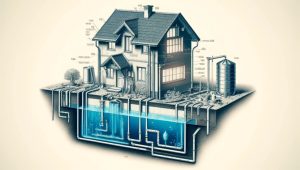
Consider a suburban home located in a region with moderate and consistent rainfall. The homeowners have installed a rainwater harvesting system that collects water from the roof and stores it in a 5,000-liter tank. The system includes a first flush diverter to discard the initial run-off that may contain contaminants, a filter to remove debris, and a pump to distribute the water for various uses.

Key Features of the System:

Roof Area: The home’s large roof area maximises rainwater collection.

First Flush Diverter: This ensures that the initial, most contaminated rainwater is not stored.

Filtration System: A multi-stage filter ensures the collected water is clean enough for garden and household use.

Pump and Distribution: An efficient pump system distributes water to the garden, toilets, and washing machine.

Benefits Realized:

Garden Irrigation: The harvested rainwater is primarily used for garden irrigation, reducing the need for municipal water and lowering water bills.

Non-Potable Household Use: The system supplies water for flushing toilets and washing clothes, reducing dependence on the municipal water supply.

Environmental Impact: By using rainwater for non-potable purposes, homeowners reduce their demand for local water resources and contribute to conservation efforts.

Conclusion

While rainwater harvesting has drawbacks and may not be the best solution for every situation, it can be highly effective in specific contexts, particularly for non-potable uses in domestic environments. Homeowners can implement sustainable and cost-effective systems by understanding and addressing the challenges associated with rainwater harvesting. Evaluating local conditions, including rainfall patterns and water demand, is crucial to determine whether rainwater harvesting is viable.

Filed Under: Green Energy, Plumbing

Reader Interactions

Leave a Reply Cancel reply

Your email address will not be published. Required fields are marked *

This site uses Akismet to reduce spam. Learn how your comment data is processed.

Primary Sidebar

Categories

  • Air Conditioning
  • Boilers
  • Central Heating
  • Electrics
  • Energy
  • Green Energy
  • HVAC
  • News
  • Plumbing

Recent Posts

  • Why Does Copper Pipe Go Thin and Develop Pinholes?
  • Why Is My Boiler Pressure High? | The GHS Group
  • Top 10 Common Boiler Faults in UK Homes
  • Are Gas Boilers Still Safe? What UK Homeowners Need to Know in 2025
  • Why the GHS Group Chooses Sentinel X800 Over More Corrosive Heating System Cleaners

Footer Widget Header

CONTACT US

Footer

GHS - Generating Heating Solutions, Powering the future through sustainability.

The GHS Group Ltd

01329 285993
info@ghs.me.uk

Pages

  • Contact Us
  • The GHS Offerings
  • Services
  • Rates and Prices
  • Accreditations
  • Testimonials
  • Finance
  • About Us
  • Website Terms and Conditions
  • Privacy Policy

Services

  • Heating
  • Plumbing
  • Electrical
  • Gas
  • Renewable Energy
  • HVAC
  • Refrigeration
  • Plantrooms
  • M&E Projects

The GHS Group Limited is a registered company in England and Wales with company number 09901007

Registered Address: 43 Carisbrooke Road, Gosport, Hants PO13 0QY


Copyright © 2026 - The GHS Group Ltd | All rights reserved | Our Privacy Policy | Website Terms and Conditions | Website design by Pink Fin Ltd

  • Home
  • Renewable Energy
    • Air Source Heat Pumps ASHP
    • Battery Storage
    • Combined Heat and Power CHPs
    • Energy Monitoring
    • Free Cooling and Pressure Cooling Systems
    • Infra-Red Heating
    • Micro Combined Heat and Power
    • Solar Panels
    • Ventilation MVHR
  • Heating
    • Boiler Troubleshooting Guide
    • Boiler Repairs
      • Boiler Repairs Gosport
      • Boiler Repairs Portsmouth
      • Boiler Repairs Stubbington
      • Boiler Repairs Fareham
    • Boiler Service
      • Boiler Service Portsmouth
      • Boiler Service Stubbington
      • Boiler Service Fareham
    • New Boiler Installation
      • Boiler Installation Portsmouth
    • ATAG Boilers NOW WITH 18 Years Warrenty
    • Maintenance Plans
  • Plumbing
    • Hot Water Cylinders
    • Plumbing Services
    • Emergency Plumber
      • Emergency Plumber Portsmouth
    • Bathrooms
    • Drain Unblocking & Repairs
  • Electrical
    • Domestic Electrical Troubleshooting
    • Electrical Testing
    • Electrical Maintenance
  • Gas
    • LPG Gas
    • Catering
  • Finance
  • Commercial and Industrial
    • HVAC
      • Air Conditioning
      • Ventilation
    • Refrigeration
    • Plantrooms
    • M&E Projects
  • About Us
    • About Us
    • GHS Story
    • Contact Us
    • The GHS Offerings
    • Services
    • Rates and Prices
    • Accreditations
    • GHS Reviews
    • Testimonials
    • Gallery
    • Join The Team
  • Blog
We use cookies to ensure that we give you the best experience on our website. If you continue to use this site we will assume that you are happy with it.