

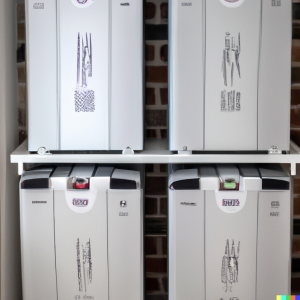
Battery storage for the home is a system that allows homeowners to store excess energy generated by renewable energy sources such as solar panels, wind turbines, or hydroelectric generators. The stored energy can then be used during periods of high demand or when renewable energy sources are not generating electricity, such as at night or during cloudy or calm weather.
The battery storage system typically consists of one or more rechargeable batteries, a battery management system to monitor an. And the battery’s charging and discharging, and an inverter to convert the stored DC energy into AC electricity that can power home appliances and devices.
Battery storage systems for the home are becoming increasingly popular as homeowners seek to reduce their reliance on grid power, increase their energy independence, and save money on electricity bills. They can also provide backup power during outages or emergencies, improving resilience and reliability.
Battery storage can be a great idea for homes for several reasons:
1. Energy independence: With battery storage, homeowners can store excess energy generated by solar panels or other renewable energy sources during the day and use it at night or during periods of high demand. This can reduce reliance on the grid, and Homeowners can reduce their electricity bills by storing energy during off-peak times and using it during peak periods, homeowners can reduce their electricity bills. Additionally, battery storage can provide backup power during outages, reducing the need for expensive generators.
2. Environmental benefits: Battery storage can help reduce greenhouse gas emissions by allowing homeowners to rely more on renewable energy sources and less on fossil fuels.
3. Grid stability: By reducing demand stabilise periods, battery storage can help stabilize the grid and reduce the need for new power plants or transmission infrastructure.
4. Resilience: Battery storage can provide resilience in the face of natural disasters or other disruptions to the grid by allowing homers to continue to generate and store their own power.
Several sources of power can be used to supply a battery storage system:
1. Solar panels: Solar panels are a popular power source for battery storage systems. They convert sunlight into electricity, which can be used to charge the batteries.
2. Wind turbines can also generate electricity in a battery storage system.
3. Hydroelectric generators: Hydroelectric generators use the energy of falling water to generate electricity, which can be stored in a battery storage system.
4. Grid power: Battery storage systems can also be charged using grid power during off-peak hours when electricity is cheaper and then discharge the stored energy during peak hours when electricity is more expensive.
5. Generators: Backup generators can charge a battery storage system during power outages or when other power sources are unavailable.
6. Other renewable energy sources: Other renewable energy sources, such as geothermal, biomass, or tidal energy, can also supply power to a battery storage system.

Leave a Reply