

Common Plumbing Problems at Home and How to Avoid a Plumbing Disaster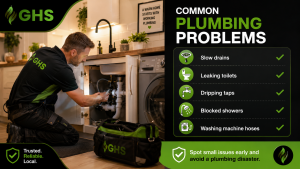
Small plumbing problems are easy to ignore, but they can quickly turn into leaks, blockages, water damage and expensive repairs.
A slow-draining sink, a dripping tap, a leaking toilet or a worn washing machine hose may not seem urgent at first. However, these small warning signs often signal a bigger plumbing issue.
At GHS Group, we always recommend dealing with minor plumbing problems early. Regular checks and simple maintenance can help protect your home, reduce water waste and avoid unnecessary emergency call-outs.
Do Not Ignore Small Plumbing Problems
Most plumbing disasters start with a small warning sign.
You may notice:
- Water is draining away slowly
- A tap dripping
- A toilet is constantly running
- A strange smell from a drain
- Water around the base of a toilet
- Damp patches near pipework
- Noisy pipes
- A washing machine hose that looks worn or brittle
These problems are often easier and cheaper to deal with when they are spotted early. Leaving them too long can lead to blocked drains, water damage, higher water bills and more disruption in your home.
Check and Maintain Your Plumbing Regularly
A quick visual check around your home can make a big difference.
Look under sinks, around toilets, near radiators, by washing machines and around shower trays. Check for signs of leaks, corrosion, damp, limescale, unusual smells or slow drainage.
Regular maintenance is not just about fixing problems. It is about preventing them before they become costly.
Slow Drains and Blockages
If water is draining away slowly, it may be a sign of a blockage forming in the pipework.
Common causes include:
- Hair
- Soap residue
- Limescale
- Food waste
- Grease and fat
- Wet wipes
- Sanitary products
- Kitchen roll or paper towels
For minor blockages, some homeowners try a suitable drain cleaner or natural cleaning method. However, if the problem keeps coming back, affects more than one drain, or causes bad smells, it is best to contact a plumber.
Repeated slow drainage can be a sign of a deeper blockage in the waste pipe or drainage system.
Be Careful What Goes Down the Toilet
Toilets are designed for human waste and toilet paper only.
Items such as wet wipes, kitchen roll, cotton pads, nappies, sanitary products and paper towels should not be flushed. Even wipes labelled as “flushable” can contribute to blockages.
During the COVID-19 lockdown, we attended call-outs where kitchen towels had been used as toilet paper. Kitchen towels do not break down in the same way and can quickly block drains.
Keeping the wrong items out of the toilet helps protect your plumbing, your drains and the environment.
Do Not Pour Fats and Oils Down the Kitchen Sink
Kitchen sink blockages are often caused by fats, oils and grease.
When hot fat is poured down the sink, it may look harmless at first. As it cools, it can solidify inside the pipework and gradually build up. Over time, this can restrict the flow and cause a blockage.
A better option is to wipe excess grease from pans with a kitchen towel and place it in the bin. Larger amounts of cooking oil should be disposed of safely in line with your local council guidance.
This simple habit can help prevent blocked kitchen drains and unpleasant smells.
Keep Shower Drains Clear
Shower drains can easily become blocked by hair, soap residue and limescale.
A few simple habits can help:
- Remove hair from the drain regularly
- Rinse away soap residue
- Use a drain cover where suitable
- Clean around the plughole often
- Watch for slow drainage or standing water
If a shower starts draining slowly, deal with it early. Waiting too long can lead to a full blockage and water backing up into the shower tray.
Toilet Leaks Can Waste a Lot of Water
Toilet leaks are one of the most common plumbing issues in the home.
A leaking toilet may not always be obvious. Sometimes water trickles silently into the pan for weeks or months. You may notice limescale marks, rippling water in the toilet bowl, or the cistern refilling when nobody has flushed it.
Toilet parts can wear over time, but many internal components are replaceable. Dealing with a toilet leak early can prevent water waste and reduce the risk of higher water bills.
If you see lime scale staining in the toilet pan, it may be a sign that water has been leaking for some time. In simple terms, you could be paying for water to go straight down the drain.
Check Washing Machine Hoses
Washing machines are another common source of household leaks.
Over time, hose connections can become brittle, loose or worn. A failed hose can release a lot of water very quickly and cause serious damage to flooring, cupboards and nearby rooms.
Check the hose and connections regularly. Look for cracks, bulges, stiffness, corrosion or signs of damp. If anything looks worn or unreliable, it is better to replace it before it fails.
Natural Tip for Limescale Around Taps and Showers
For a simple, natural cleaning solution, vinegar can help tackle limescale around taps and shower accessories.
Wrap a vinegar-soaked cloth or kitchen towel around the affected area and leave it for around an hour. Then wipe clean.
For chrome taps, a small amount of baby oil on a soft cloth can help restore shine after cleaning.
Always test cleaning products on delicate finishes, and avoid abrasive products that could damage taps or fittings.
Do Not Leave Leaking Taps Too Long
A dripping tap may seem like a minor irritation, but it can waste water and become worse over time.
In some cases, a leaking tap may only need a simple adjustment. In others, it may need a replacement washer, cartridge, valve or tap part.
It is always best to deal with leaking taps sooner rather than later. A small drip today can become a bigger repair tomorrow.
When to Call a Plumber
You should contact a professional plumber if:
- A leak is getting worse
- Water is damaging walls, ceilings or floors
- A toilet keeps running
- A drain keeps blocking
- Several drains are slow at the same time
- You can smell drains
- Pipework looks corroded or damaged
- You are unsure where the problem is coming from
Early advice can often prevent further damage and help keep repair costs under control.
Plumbing Help from GHS Group
At GHS Group, we help homeowners with everyday plumbing issues, leaks, blockages, toilet repairs, tap problems, washing machine connections and general plumbing maintenance.
Do not wait for a small problem to become a plumbing disaster.
For reliable plumbing support across Gosport, Fareham, Portsmouth and Hampshire, contact GHS Group today.
Call 01329 285993

Leave a Reply