

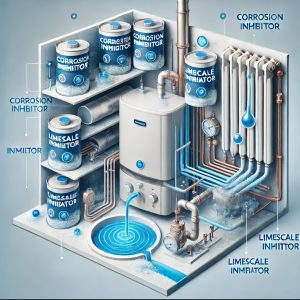
 Central heating systems are the unsung heroes of our homes, providing warmth and comfort during the colder months. However, they require regular maintenance to ensure they function efficiently and last many years. One critical aspect of this maintenance involves using chemical inhibitors and cleansers. In this blog, we’ll explore these chemicals, how they protect your system, particularly the boiler, and why they are essential for your central heating’s longevity and efficiency. Understanding Chemical Inhibitors and Cleansers
Chemical Inhibitors are specially formulated chemicals designed to prevent corrosion and limescale buildup within the central heating system. These issues can significantly impact the system’s efficiency and durability. Corrosion can lead to rusting of the internal components, while limescale buildup, especially in challenging water areas, can obstruct water flow and reduce heat transfer efficiency.
System Cleansers, on the other hand, are used to remove existing sludge, debris, and scale from the system. Over time, sludge—a mixture of rust, dirt, and scale—can accumulate in radiators and pipes, causing blockages and reducing the system’s efficiency. Cleansers are beneficial before installing new components or after significant system use, ensuring the system is free of any impurities that could impair its function.
How Do These Chemicals Protect Your Boiler?
The boiler is the heart of any central heating system. It heats water through radiators and underfloor heating systems. Therefore, protecting the boiler from damage is crucial for the overall health of your heating system.
Preventing Corrosion: Boilers comprise various metal components, including steel, copper, and aluminium. These metals can corrode without proper protection, leading to leaks and system failures. Chemical inhibitors form a protective layer on the metal surfaces inside the boiler and throughout the system, preventing oxygen from causing rust.
Inhibiting Limescale Buildup: Limescale can quickly build up on the heating elements and inside the boiler’s heat exchanger in areas with hard water. This buildup acts as an insulator, reducing the efficiency of the heat transfer process. Your boiler has to work harder to heat the water, increasing energy consumption and wear on the system. Limescale inhibitors prevent these deposits from forming, ensuring optimal boiler performance.
Removing Sludge and Debris: Over time, rust particles and other debris can accumulate in the boiler and the heating system. This sludge can block pipes, reduce water flow, and cause uneven heating in your home. System cleansers are designed to break down and remove these deposits, ensuring that water can circulate freely and the boiler operates efficiently.
Extending Boiler Life: Chemical inhibitors and cleansers help extend the life of your boiler by preventing corrosion and scale buildup and keeping the system clean. A well-maintained boiler is less likely to suffer from breakdowns and will last longer, saving you money on repairs and replacements.
Best Practices for Using Inhibitors and Cleansers
Regular Maintenance: Incorporate chemical inhibitors and cleansers into your regular heating system maintenance. Check the inhibitor levels annually and top them up if necessary.
System Flushing: When using a system cleanser, following the manufacturer’s instructions is crucial. Typically, the cleanser is added to the system and left to circulate for a specified period before being flushed out. This process should be followed by adding an inhibitor to protect the clean system.
Professional Servicing: While homeowners can do some maintenance, having a professional service your central heating system annually is advisable. They can perform a thorough check, including testing water quality, assessing inhibitor levels, and ensuring no hidden issues.
Conclusion
Chemical inhibitors and cleansers are vital in maintaining the efficiency and longevity of your central heating system, particularly your boiler. By preventing corrosion, inhibiting limescale buildup, and removing sludge, these chemicals ensure your system runs smoothly and efficiently, providing reliable warmth throughout your home. Regular maintenance and proper use of these chemicals can save you from costly repairs and extend the life of your boiler, making them an essential investment for any homeowner.

Leave a Reply