

Get Your Boiler Ready for Winter: Essential Heating Checks for UK Homeowners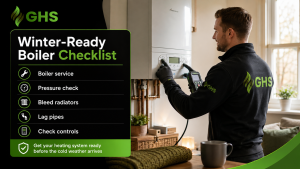
As summer comes to an end and September arrives, many of us start thinking about the inevitable change in the British weather. Cooler mornings, darker evenings and sudden temperature drops are all signs that winter is on its way.
Before the heating season properly begins, it is a good idea to check that your boiler and central heating system are ready. A little preparation now can help reduce the risk of breakdowns, poor heating performance and unexpected repair costs when you need your heating most.
At GHS Group, we always recommend booking your boiler service before the cold weather hits. Once freezing conditions arrive, heating engineers are often much busier, and small issues can quickly become urgent breakdowns.
Why Winter Boiler Preparation Matters
Your boiler works hard through the colder months. After a long summer with little or no heating use, problems can appear when the system is switched back on.
Common winter heating issues include:
- Boiler pressure dropping
- Radiators not heating properly
- Cold spots on radiators
- Air trapped in the system
- Boiler lockouts or fault codes
- Leaks from pipework or external discharge pipes
- Thermostat or heating control issues
- Poor hot water performance
Regular boiler maintenance helps identify problems early and gives homeowners peace of mind before the winter rush.
Book an Annual Boiler Service
One of the most important checks is your annual boiler service.
A boiler service helps ensure your appliance is operating safely, efficiently and correctly. During a service, a qualified heating engineer will check the boiler’s condition, inspect key components, carry out safety checks, and ensure it is performing as it should.
An annual service can also help protect your manufacturer’s warranty, improve reliability and reduce the risk of unexpected breakdowns.
If your boiler has not been serviced in the last 12 months, now is the ideal time to book.
Check Your Boiler Pressure
Boiler pressure can drop over time, especially if there has been a small leak, air in the system or recent radiator bleeding.
Most domestic boilers have a pressure gauge on the front. If the pressure is too low, your heating and hot water may not work properly. If it is too high, it may indicate another issue that needs to be checked.
Always refer to your boiler manufacturer’s instructions. If you are unsure, contact a qualified heating engineer rather than guessing.
Bleed Your Radiators
If your radiators feel cold at the top but warm at the bottom, there may be trapped air inside the system.
Bleeding your radiators can help remove air and improve heating performance. This is a simple homeowner check, but it should be done carefully. After bleeding radiators, you may need to check and adjust the boiler pressure.
If radiators keep filling with air, there may be an underlying issue with the heating system that needs investigation.
Balance Your Radiators
Radiator balancing helps ensure heat is distributed evenly around your home.
If some radiators heat up quickly while others stay cool, your system may be unbalanced. This can make certain rooms uncomfortable and may cause the boiler to work harder than necessary.
Balancing radiators can improve comfort, system performance and heating efficiency.
Look for Radiator Problems
Before winter, walk around your home and check each radiator.
Look out for:
- Cold spots
- Rust marks
- Signs of leaks
- Noisy radiators
- Radiators that do not heat up
- Valves that are stiff, leaking or not working
- Thermostatic radiator valves that are stuck
Small radiator issues can often be resolved before they become bigger heating problems.
Check the Boiler Flame
On older boilers, where the flame is visible, it should normally burn blue. A yellow, orange or unstable flame may indicate a safety concern.
Modern boilers are often room-sealed, meaning you may not be able to see the flame. Never remove the boiler casing to check. If you are concerned about your boiler flame, smell gas, or suspect unsafe operation, stop using the appliance and contact a Gas Safe registered engineer.
Keep the Boiler Area Well Ventilated
Some boilers require ventilation to operate safely and correctly. Boiler cupboards should not be blocked with towels, coats, storage boxes or household items.
Make sure the area around the boiler is clear and accessible. This also helps your engineer carry out proper servicing and maintenance checks.
Check the External Pipe
If you notice water dripping from an external pipe outside your property, it may be a sign that a pressure relief valve is letting by or that there is another issue with the heating system.
This should not be ignored. A dripping external pipe can lead to pressure loss, heating problems and repeated boiler faults.
Make Sure the Flue Is Accessible
Your boiler flue removes products of combustion safely from the property. It must be correctly installed, clear and accessible for inspection.
Before winter, check that the flue terminal outside is not blocked by plants, leaves, storage, debris or other obstructions. If your flue is difficult to access or inspect, mention this when booking a service.
Lag Your Pipes Before Freezing Weather Arrives
Cold weather can cause exposed pipework to freeze, especially in lofts, garages, outbuildings and external areas.
Lagging vulnerable pipes can help protect your heating and hot water system during winter. This is especially important for condensate pipes, which can freeze, causing boiler lockouts.
Pipe insulation is a simple step that can prevent a very inconvenient winter breakdown.
Never Try to Repair a Boiler Yourself
Homeowners can perform simple visual checks, but boiler repairs must be carried out only by a suitably qualified engineer.
Never remove the boiler casing, attempt gas work, adjust internal components or try to repair faults yourself. It is not worth the risk to your home, your safety or your boiler warranty.
If your boiler is showing a fault code, making unusual noises, losing pressure or not working correctly, contact a professional.
Do Not Wait for a Winter Breakdown
The best time to check your boiler is before you urgently need it.
Booking a heating visit in September or early autumn can help identify issues before the busiest winter period. It also gives you more time to address any repairs, parts, or system improvements before temperatures drop.
At GHS Group, we can help with boiler servicing, heating repairs, radiator problems, controls, pressure issues and wider central heating checks.
For honest advice and reliable heating support across Gosport, Fareham, Portsmouth and Hampshire, contact GHS Group today.
Call 01329 285993

Leave a Reply